
Buying Guides
How to Choose a Refuse Compactor Truck for African Fleets
Match a refuse compactor truck to route access, bins, waste loads and unloading arrangements before comparing configurations for an African fleet.
Key takeaways
- Start with route access and the unloading journey.
- Check body volume and permissible payload as separate values.
- Match the lifting interface to the actual bins.
- Compare complete written specifications and commercial terms.
Choosing a refuse compactor truck starts with the collection route, not the largest body in a catalogue. Municipal buyers and waste contractors need a vehicle that can reach collection points, handle the bins already in use and unload at the intended disposal facility. A configuration that looks productive on a main road may struggle in a narrow market street or spend too much of its shift travelling to an unloading point.
This guide helps African fleet buyers turn those working conditions into a usable specification. Establish the waste stream, route access, expected loads and operating arrangements before comparing chassis brands or asking for a price.
1. Map the collection route and unloading journey
List the streets, collection points, transfer stations and disposal facilities that a truck must visit. Record the narrowest access, tight turns, steep sections, weak surfaces and restrictions at bridges or facilities. Include the return journey and time spent waiting to unload. These details influence the chassis dimensions, wheelbase and useful body size more directly than a broad description such as municipal duty.
Separate a dense collection route from a transfer operation. Repeated short stops, frequent lifting cycles and close interaction with crews create a different duty pattern from carrying a loaded container over a long distance. If both jobs belong to the same vehicle, describe each portion of the shift. A written route description gives the supplier something specific to check and reduces ambiguous assumptions in competing quotations.
2. Treat body volume and permissible payload separately
A body described in cubic metres measures space. It does not establish how many tonnes the finished vehicle may legally carry. Waste density varies with composition, moisture and collection practice; compaction changes how material occupies the body. The finished vehicle also carries its body, lifting equipment, hydraulic system, fuel, crew and any additional equipment. Obtain the relevant weight figures for the actual configuration.
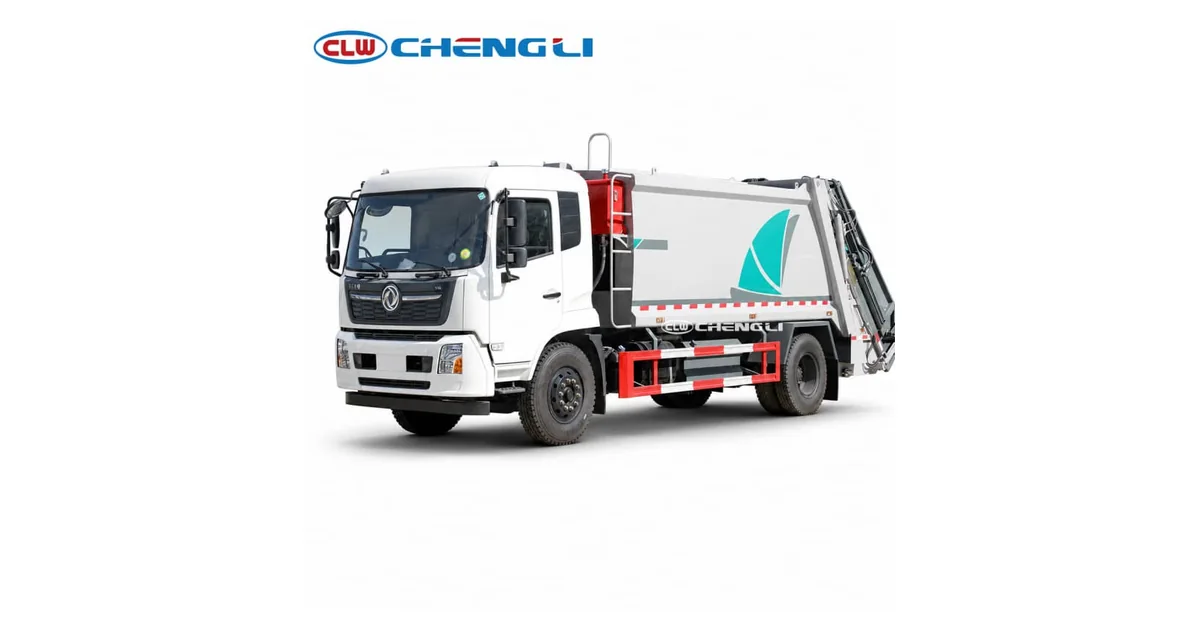
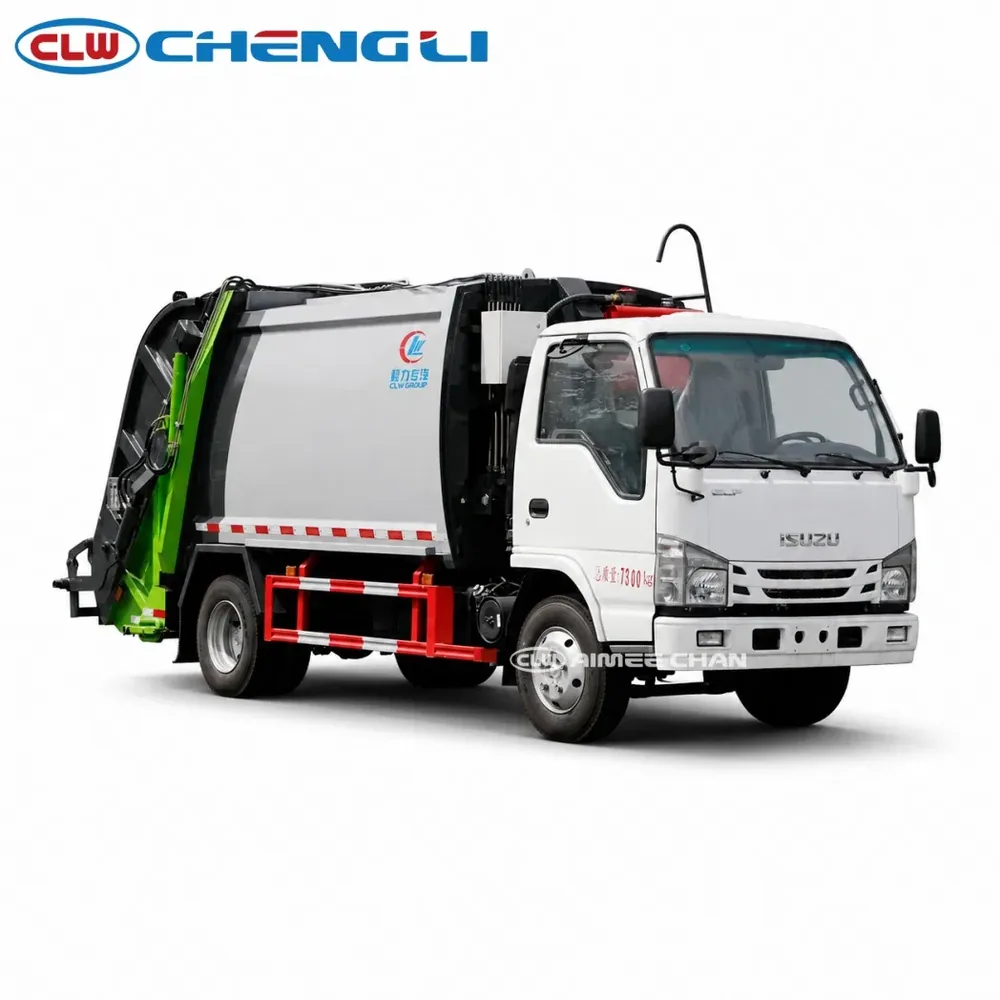
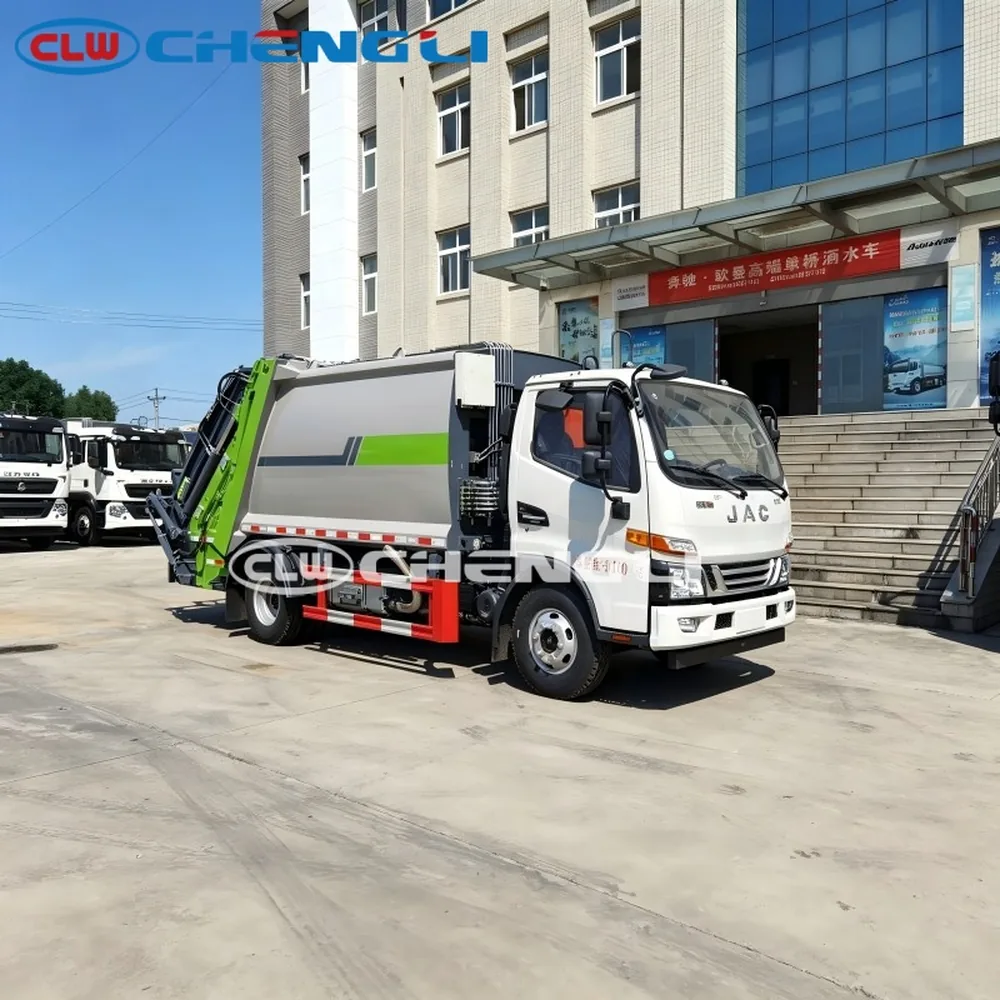
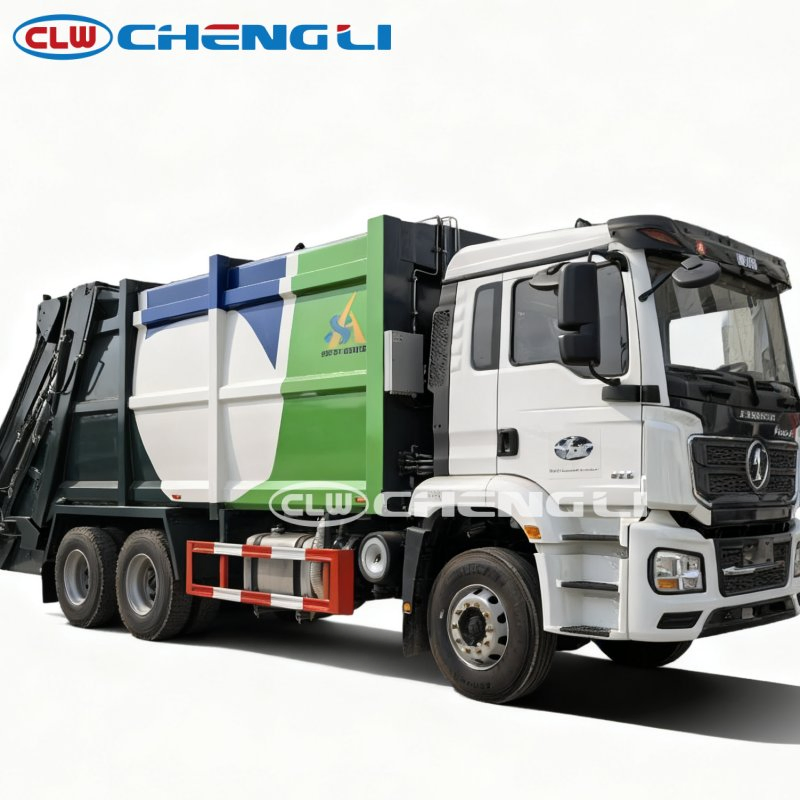
For an initial comparison, the catalogue includes an Isuzu 6 m³ refuse compactor, a JAC 8 m³ rear-loader compactor and a Dongfeng 14 m³ compactor. Use those body sizes as starting points for different routes. Confirm the completed-vehicle weights and axle limits separately; a larger body does not automatically create a larger permissible waste load.
3. Check the bin interface before selecting a lifter
Collect photographs and measurements of the containers used on the route. Identify their capacity, lifting interface, condition and typical filled weight. A nominal bin size alone may not describe the points that the lifter grips. Explain whether the fleet uses wheeled bins, communal containers, manual loading or a mixture. Ask the supplier to confirm the proposed lifting arrangement against that information in writing.
Also consider the space around each collection point. Crews need room to move containers safely into position, and the truck needs a clear working area behind the hopper. A lifting mechanism should not be selected only because it appears in a photograph. Compare its operating limits, control positions and compatibility with the actual bins. Record any exceptions that still require manual handling or a different collection method.
4. Compare complete configurations on the same basis
Prepare a comparison sheet that makes missing information visible. Give each supplier the same route assumptions and ask for a configuration-specific response. Keep chassis information separate from body information, then check how the two work together. Options described as available should not be treated as included equipment unless the quotation identifies them clearly.
| Decision area | Information to supply | What to confirm in the offer |
|---|---|---|
| Route access | Street width, turns, gradients and surfaces | Vehicle dimensions, wheelbase and relevant operating limits |
| Waste load | Waste types, measured loads and unloading frequency | Body volume, completed-vehicle weights and applicable axle limits |
| Bin handling | Container dimensions, interface and photographs | Lifter compatibility, rated limits and control arrangement |
| Operating environment | Heat, dust, rain, washing and daily duty pattern | Specified cooling, filtration, corrosion protection and equipment |
| Delivery planning | Country, port, quantity and inspection requirements | Documents, shipping basis and itemized commercial terms |
Do not compare one chassis-only price with another supplier's completed truck. Ask whether each offer describes the same body, lifting arrangement, controls and accessories. Identify optional equipment on a separate line so that the comparison remains understandable when a configuration changes.
5. Review daily operation and maintenance access
A productive configuration must fit the people and facilities that will operate it. Discuss crew positions, visibility around the rear of the vehicle and the controls used during loading and unloading. Clarify the operating instructions and safety information that will accompany the selected equipment. Confirm how the vehicle is to be secured during maintenance rather than relying on a familiar-looking body design.
Review access to service points and cleaning areas with the intended workshop. Ask for the hydraulic, electrical and body equipment documentation appropriate to the configuration. Identify consumables and parts that the fleet wants included in its initial quotation. Availability, training, warranty terms and response arrangements should be agreed explicitly; do not infer a service commitment from a general product description.
6. Send an RFQ that can support a written specification
Summarize the working requirement in a short request for quotation. Include the destination country, quantity, preferred driving side, route description, body size under consideration, bin details and any chassis preference. Add photographs of access constraints and containers where they help explain the job. State which questions remain open rather than filling gaps with assumptions copied from a different vehicle.
Ask for a written equipment list, a configuration drawing where appropriate and a clear statement of the price basis. Shipping, insurance, inspection and destination charges need to be identified in the commercial discussion. Import requirements must be checked against the destination authority's current rules for the vehicle being ordered. A group management system certificate does not replace model-specific or destination-specific documents.
Use the refuse truck catalogue to frame the options, then submit the route and bin information through the enquiry form below. The useful outcome is a comparable configuration and a written list of checks to resolve before ordering, rather than an attractive body-volume figure on its own.
Configurations to compare
Frequently asked questions
Does a larger compaction body always provide more payload?
No. Body volume describes space. Permissible payload and axle loads depend on the completed vehicle and applicable rules. Confirm the relevant weights for the selected configuration.
Can our existing wheeled bins be used?
Provide bin dimensions, lifting-interface details, photographs and typical filled weights. Compatibility must be confirmed against the selected lifting equipment.
Do group management certificates establish destination approval?
No. Group management system certificates do not replace the documents or approvals required for a particular vehicle and destination. Confirm the applicable requirements before ordering.
What information should accompany the enquiry?
Include route access, waste types, bin details, unloading arrangements, quantity, destination country and port, plus any preferred chassis or driving side.
Related guides
Request a quotation for your application
Include the working conditions, country, quantity and configuration requirements described in this guide.